

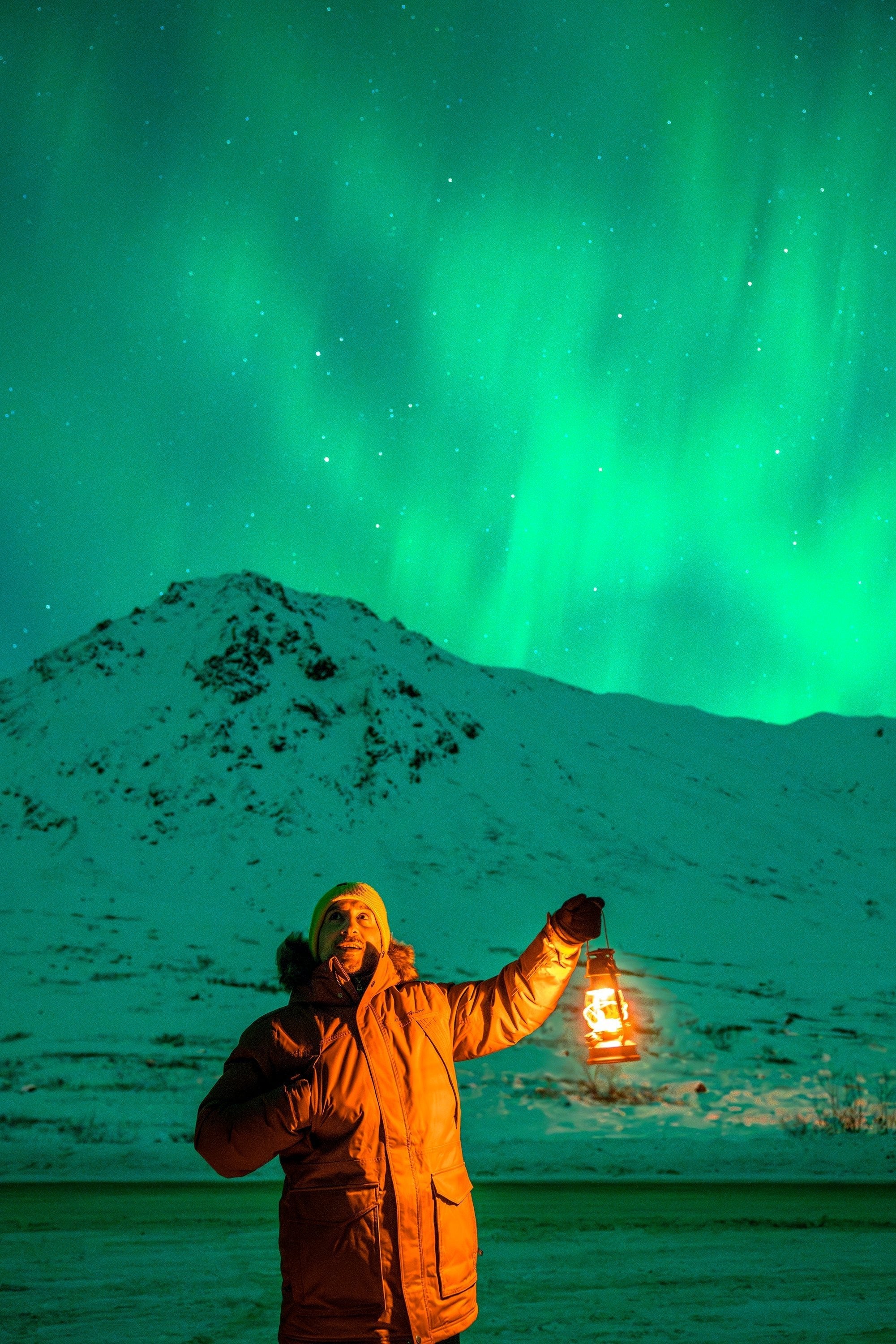
If you're planning a trip to Anchorage specifically to see the northern lights, the single most important decision you'll make is when to go. The aurora is visible year-round at Alaska's latitude — but the practical window for aurora viewing is roughly eight months, and within that window, some months are dramatically better than others.
I spent three years living in Anchorage and documented over 100 aurora nights. Here's exactly what each month looks like — not based on theory, but on direct experience.
Why Month Matters: The Two Key Variables
Aurora visibility in Anchorage depends on two things working together: geomagnetic activity (the KP index) and darkness (hours without sunlight). You need both.
The KP index follows solar cycles and is elevated twice per year — around the spring and autumn equinoxes (March and September). These equinox peaks are the most reliable windows for strong aurora activity. Outside those peaks, aurora still occurs regularly, but the displays tend to be less intense and less frequent.
Darkness is the other constraint. In Anchorage, summer brings near-24-hour daylight — the aurora is happening, but you simply can't see it. The practical aurora viewing season runs from late August through mid-April, when Anchorage has enough darkness to see the sky.
Month-by-Month Breakdown
August (Late) — Season Opens
By late August, Anchorage finally has enough darkness — roughly 7–8 hours — to begin aurora hunting. Geomagnetic activity starts building toward the autumn equinox peak. Temperatures are mild (5°C to 15°C / 40°F to 60°F), making this the most comfortable month to stand outside in the dark. Fall colors begin appearing in the birch forests. Aurora probability: moderate and rising.
September — The First Peak
September is one of the two best months of the year for aurora in Anchorage. The autumn equinox (around September 22–23) supercharges geomagnetic activity — statistically, September produces more strong aurora events than any other month. Darkness increases rapidly throughout the month, from about 12 hours at the start to 14+ hours by month's end. Fall colors are at their absolute peak — golden birch forests, orange tundra, the first snow dusting the Chugach peaks. The combination of aurora probability, landscape beauty, and comfortable temperatures makes late September the single best time to visit.
October — Extended Season, Rising Drama
October extends the autumn equinox window and adds a new dimension: winter is arriving. Snow settles on the mountains, then gradually descends into the valley. Temperatures drop to -5°C to 5°C (23°F to 41°F). Darkness continues increasing. Aurora probability remains very high — October is consistently one of the strongest aurora months in Anchorage. The landscape shifts from fall gold to early winter white, and aurora over fresh snow is something entirely different from aurora over bare ground. Aurora probability: very high.
November — Deep Autumn
November brings the first real winter conditions to Anchorage. Temperatures regularly drop below -10°C (14°F). The city is properly dark — 16+ hours without sun by month's end. Aurora frequency remains solid, though the equinox boost has faded. The landscape is now fully winter. Cold management becomes more important. Aurora probability: good.
December — Deep Winter Begins
December is the darkest month in Anchorage — the winter solstice arrives around December 21, bringing roughly 5.5 hours of daylight. Maximum darkness means maximum aurora viewing hours. But December also brings increased cloud cover from Pacific weather systems, and temperatures drop further. The holiday travel season means flights and hotels are expensive. Aurora probability: moderate — limited by weather more than activity.
January — The Cold Core
January is the coldest month. Temperatures in Anchorage average -10°C to -15°C (5°F to 14°F), with cold snaps reaching -25°C (-13°F). Interior Alaska gets far colder. The aurora is absolutely present — January produces many spectacular displays. But the cold demands serious preparation. This is also typically the quietest tourist month, meaning better hotel rates and more exclusive experiences. Aurora probability: good, but cold management is essential.
February — Deep Winter Sweet Spot
February is often underrated. Temperatures remain cold but begin moderating slightly. Days start lengthening noticeably — you gain about 5 minutes of daylight per day. Aurora activity is strong. The landscape is at its most dramatic: deep snow, frozen lakes, ice-covered rivers. Iditarod preparation begins in Anchorage and the Mat-Su Valley — you might catch sled dog training runs. Aurora probability: high.
March — The Second Peak
March rivals September as the best aurora month of the year. The vernal equinox (around March 20–21) produces another surge of geomagnetic activity. Days are lengthening rapidly — you still have 10–12 hours of darkness for aurora viewing, but temperatures are noticeably milder than December through February. Snow conditions are excellent for outdoor activities. The Iditarod race launches from Anchorage in early March — a uniquely Alaskan backdrop. March is the second-best month to visit, and for winter photography specifically, it may be the best.
April — Season Closes
Early April still offers aurora viewing, but the window is narrowing fast. By mid-April, Anchorage has 15+ hours of daylight and aurora visibility becomes unreliable. Snow begins melting. This is transition season — worth considering only if early April dates are the only option.
My Honest Recommendation
After 100+ aurora nights in Anchorage, here's how I rank the months:
Tier 1 — Best: Late September, October, March
Peak geomagnetic activity, reliable darkness, dramatic landscapes. These are the months I'd choose first.
Tier 2 — Very Good: November, February
Strong aurora probability, full darkness, genuine winter conditions. Excellent for photography.
Tier 3 — Good: December, January
Maximum darkness, consistent aurora, but weather and extreme cold require more planning.
Tier 4 — Season Edges: Late August, early April
Aurora is possible, but you're working with limited darkness windows.
One More Thing: Flexibility Matters More Than Month
Here's the truth that no calendar can change: the aurora doesn't follow a schedule. The single biggest factor in your aurora success isn't which month you visit — it's whether you have a multi-night window and someone who can read the forecasts and move when conditions open up.
A four-day trip in October with a knowledgeable guide who will drive two hours north on 24 hours' notice will outperform a two-night trip in peak September every time.
That flexibility — multiple nights, real-time forecasting, and the willingness to chase — is the foundation of my Alaska Northern Lights Tour. If you're serious about seeing the aurora on your visit to Alaska, I'd love to take you.
— Hasan Akbas, Aurora Photographer · Anchorage, Alaska
Alaska Northern Lights Tour
Stop researching. Start chasing.
4 days. 3 consecutive aurora nights. Matanuska Glacier, dog sledding, and a National Geographic photographer who knows exactly where to position you — and when.
View the Alaska Northern Lights Tour →Starting from $4,999 · Maximum 6 guests · Fall 2026 & Winter 2027


