

By Hasan Akbas · Landscape Photographer & Alaska Tour Host
Most people picture dog sledding from movies. A quiet snowscape, a wooden sled, dogs trotting peacefully through the trees. I want to correct that image immediately.
When sixteen Alaskan huskies launch a sled at full sprint across a frozen valley, the sound is not peaceful. The sound is controlled chaos — paws hammering packed snow, the sled runners cutting ice, the dogs communicating with each other in a language of pure motion. Within the first thirty seconds, you understand why these animals have been bred for this for a thousand years. They are not pets that pull. They are athletes that run, and the running is what they live for.
This is what Day 2 of the Alaska Northern Lights Tour looks like in winter.
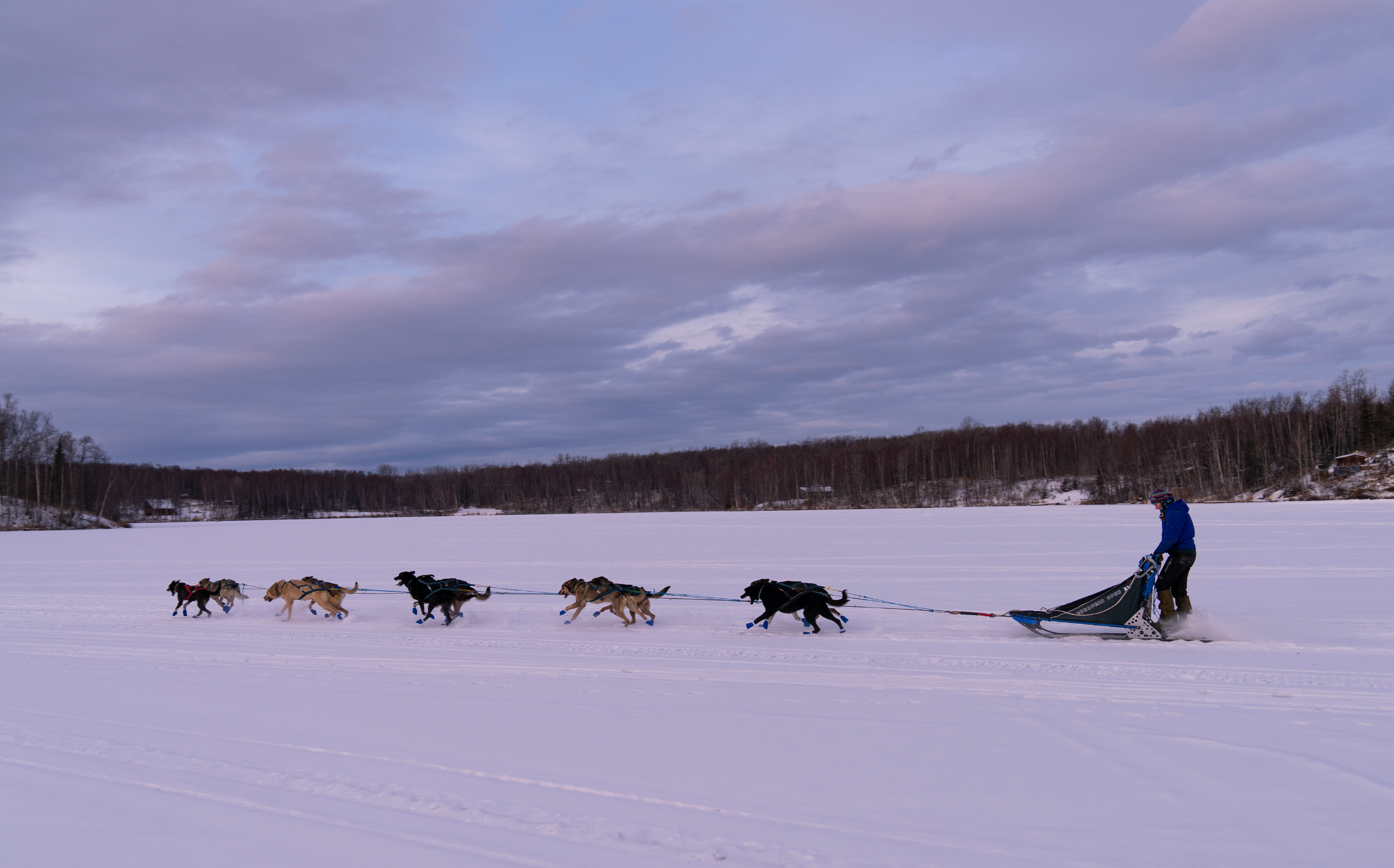
Dog sledding at full speed — Mat-Su Valley, Alaska © Hasan Akbas
What Is the Iditarod?
The Iditarod Trail Sled Dog Race runs over 1,000 miles from Anchorage to Nome, Alaska, across some of the most remote and punishing terrain in North America. Mushers and their teams travel through mountain passes, across frozen rivers, along coastal ice — in temperatures that can drop to -50°F — completing the race in roughly nine to seventeen days.
The Iditarod is not a tourist attraction. It is one of the most demanding endurance events on earth. When I say the kennel we visit has Iditarod heritage, I mean this precisely — these are working kennels with competitive race histories, not operations built for sightseeing. The dogs you meet on the tour are the same dogs that train for and run competitive races.
The Mat-Su Valley: Alaska’s Dog Sledding Country
The Matanuska-Susitna Valley — the Mat-Su — sits roughly an hour north of Anchorage, ringed by the Chugach and Talkeetna mountain ranges. In winter, the valley floor is covered in snow from November through April, and the network of trails through the birch forests and across the frozen lakes makes it ideal sled dog terrain. This is where Alaska’s most competitive kennels are concentrated. The mushers here are actively competing in one of the world’s great endurance sports.
What Happens on the Tour
We arrive at the kennel in the morning. Before the run, you spend time in the yard with the dogs. This part surprises guests more than the sledding itself.
Iditarod-trained huskies are not the reserved, dignified animals people expect. They are friendly, intensely curious, and completely uninterested in performing patience for visitors. The musher will introduce you to individuals — this one has run three Iditarods, this one is the lead dog, this younger one is in her first training season.
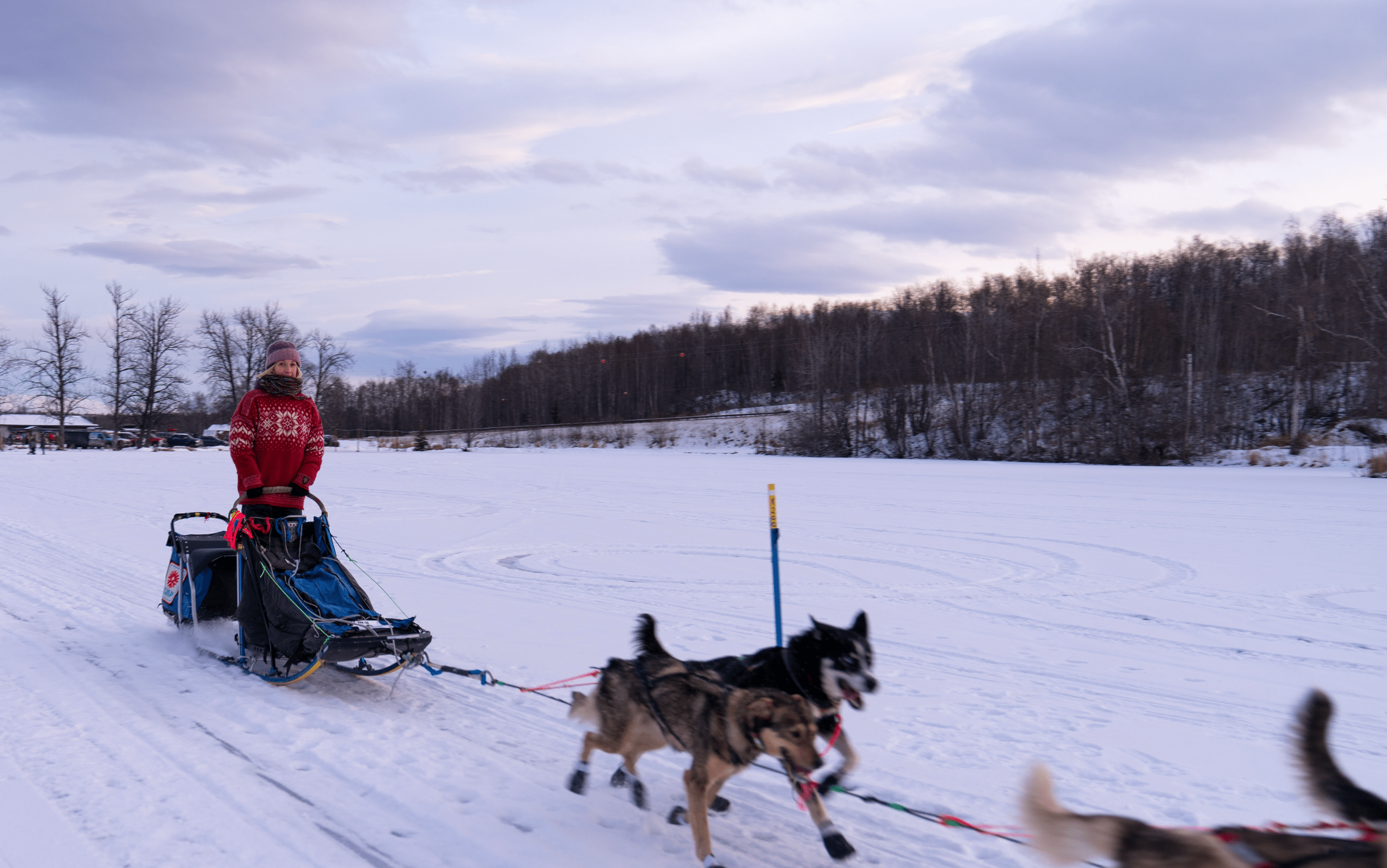
Then the team is harnessed. This is when the energy in the yard changes entirely. The dogs know what the harness means. They start to vocalize — not barking exactly, more of a continuous, urgent sound — and the pulling against the lines begins before the sled is even out of the yard. They want to go. They have been bred for ten centuries to want to go.
What follows is approximately thirty minutes on the trails. The speed is real — these dogs run at twenty to twenty-five miles per hour in sprint conditions. The sled banks around corners. The valley opens up around you. The mountains are there on the horizon, white and enormous. The dogs run in complete silence except for their breathing and their footfalls.
Dog Sledding vs Reindeer Farm: The Seasonal Difference
The dog sledding experience requires reliable snowpack, which typically arrives in the Mat-Su Valley in mid-to-late November and remains through April. For this reason, winter and spring departures (February through April) include full dog sledding at the kennel.
Fall departures (September through November) include a Reindeer Farm visit instead — a genuinely rare wildlife encounter in the Chugach foothills that the majority of Alaska visitors never have access to. If dog sledding is specifically what you are coming for, winter departures are the right choice.
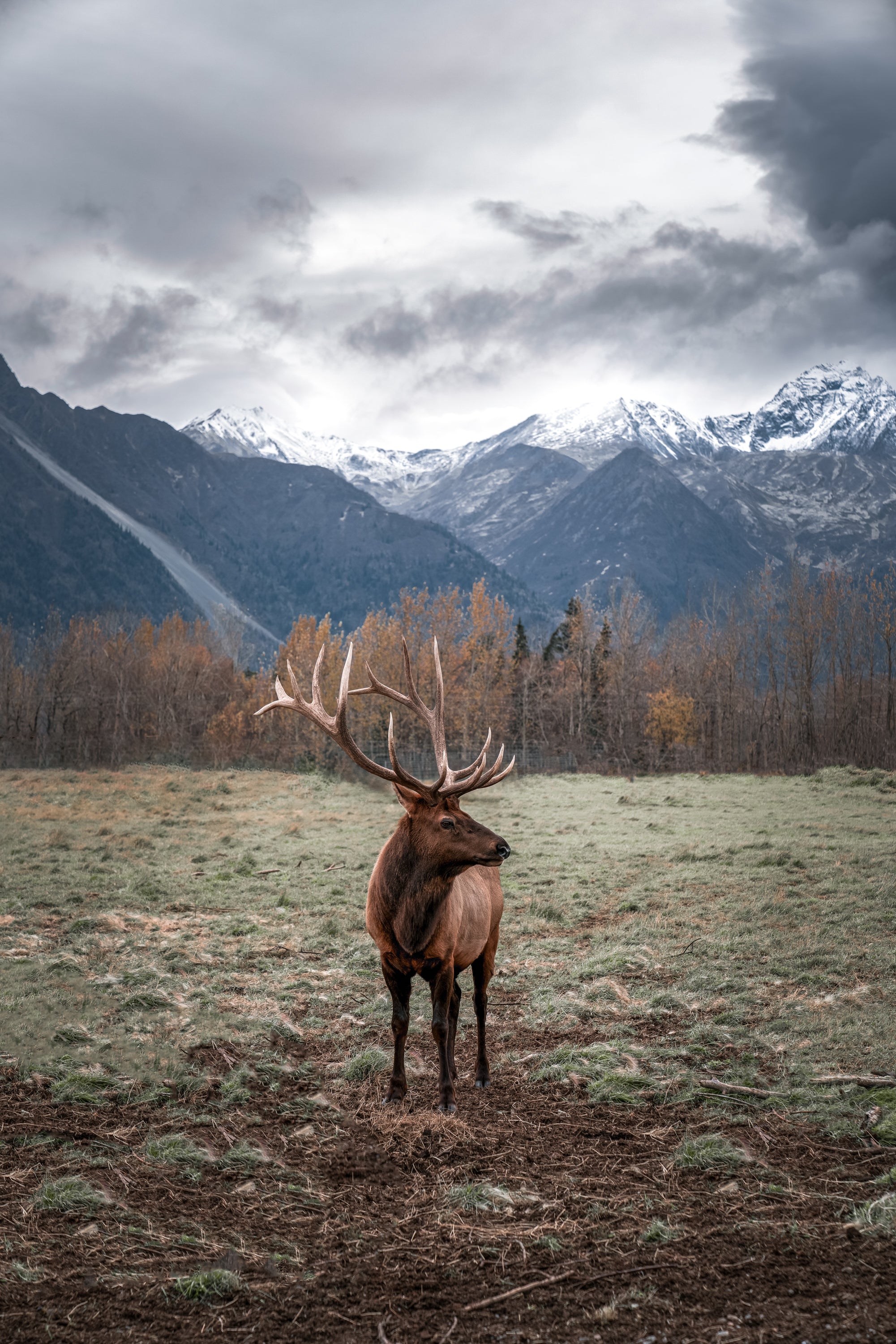
Reindeer Farm, Chugach foothills — fall departures © Hasan Akbas
Photography Tips for the Kennel Experience
In the yard: Use burst mode and a fast shutter speed — 1/500s or faster. The faces and eyes of the dogs are the subject. Get low. The musher won’t rush you.
On the sled: Handheld photography at speed is genuinely difficult. I recommend a wide-angle lens and accepting that some frames will be motion-blurred. The blur is honest — it conveys the speed better than a sharp freeze. Video is often more satisfying than stills for the running sequence.
Smartphone: Modern iPhone and Samsung flagships handle this well in good light. In low winter light, switch to photo (not video) mode and let the computational photography do its work.
Alaska Northern Lights Tour
Dog sledding is fully included in winter and spring departures — no separate booking, no additional fee. After the kennel, Matanuska Glacier in the afternoon. Aurora chase in the evening. Maximum six guests.
View Winter Departure Dates →

