

By Hasan Akbas · Landscape Photographer & Alaska Tour Host
There is a town in Alaska that you can only reach by going through a mountain.
Not around it. Through it — two and a half miles of solid granite, in a tunnel originally built for military trains during World War II, in a place the U.S. Army chose specifically because it was hidden from the sea and invisible from the air.
That town is Whittier. And it is one of the strangest, most quietly remarkable places I have visited in three years of living in Alaska.
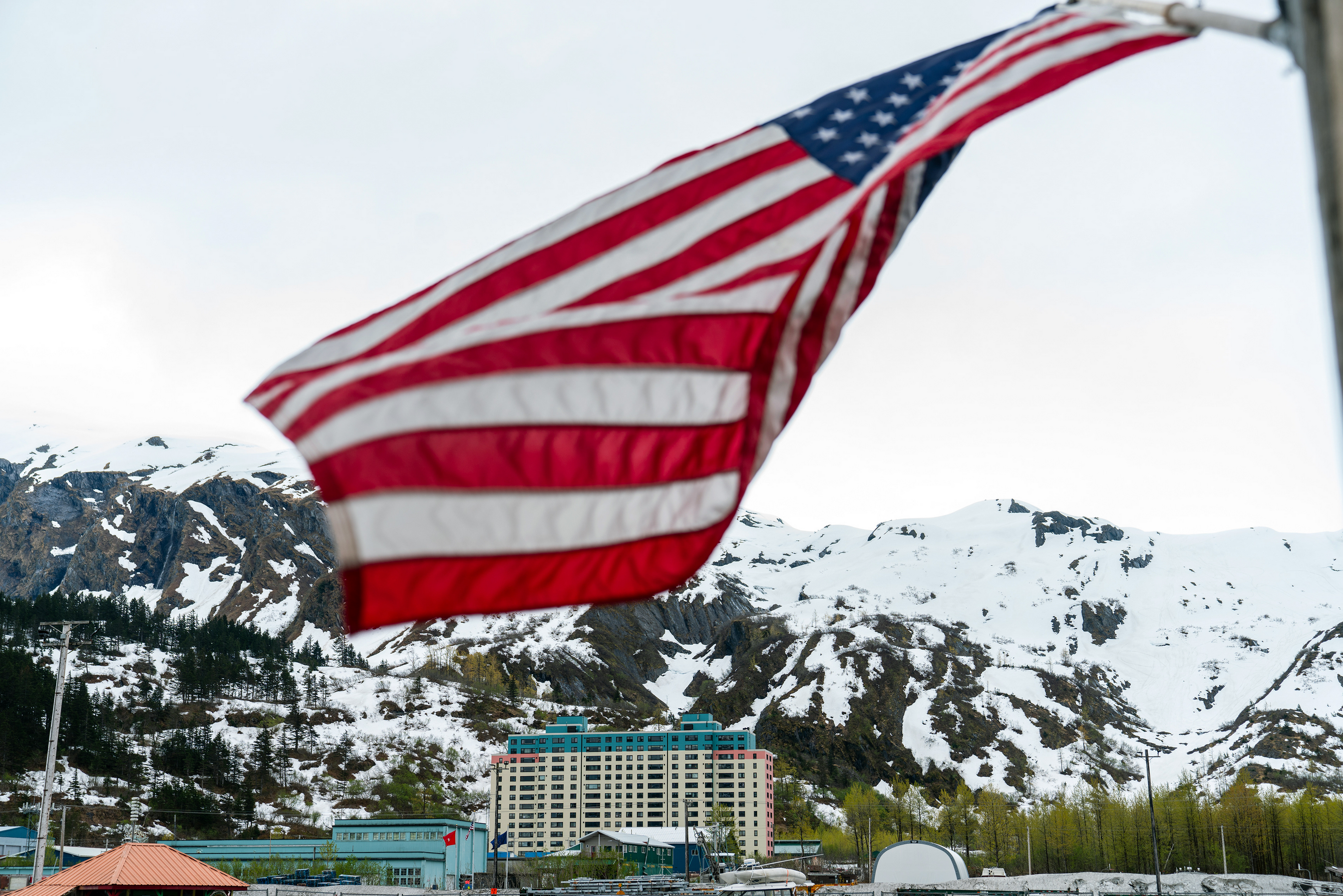
Whittier — Prince William Sound, Alaska © Hasan Akbas
How Do You Get to Whittier?
Whittier sits at the head of Passage Canal on the eastern shore of Prince William Sound, surrounded on three sides by mountains that rise directly from the water. There is no road around those mountains. Until 2000, there was no road at all — only a railroad line through the Anton Anderson Memorial Tunnel.
The tunnel was converted for vehicle traffic in 2000 — a shared rail-and-road tunnel that alternates direction on a timed schedule. Inside, it is 2.5 miles long, lit by a string of lights that disappear into the distance. The walls are raw rock. It takes approximately four minutes to drive through. You emerge into Whittier with the mountain wall closing behind you. This is one of the more unusual arrival experiences anywhere in North America.
What Is Whittier?
Whittier has a permanent population of approximately 200 people. Most of them live in a single building.
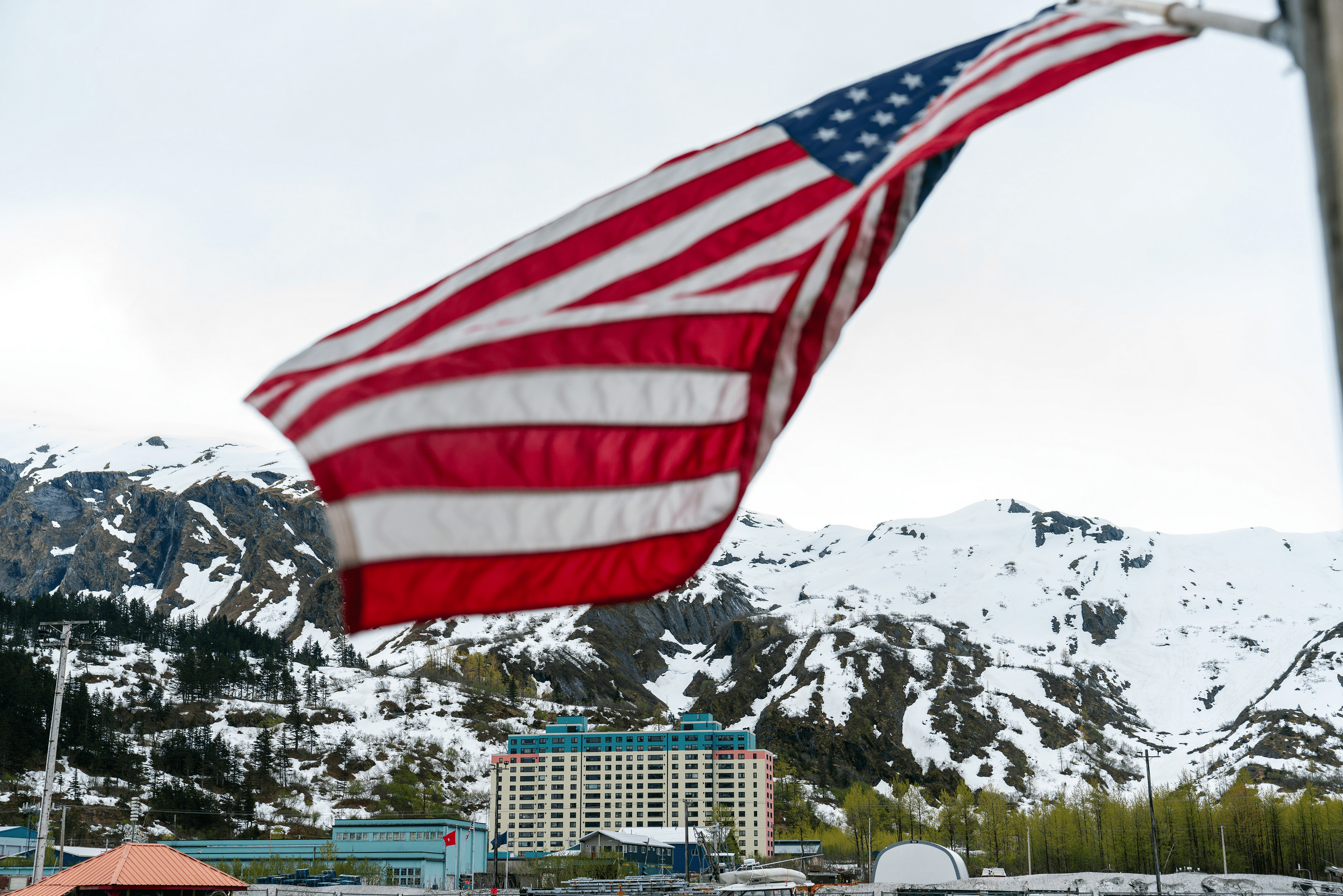
The Begich Towers — a fourteen-story former military barracks — contains residential apartments, the post office, a bed and breakfast, a health clinic, a church, the police department, and the city offices. In winter, residents can go from their apartment to the grocery store to the school without stepping outside. In a town where annual rainfall exceeds 170 inches and snow can fall in any month, this is practical architecture.
The building was constructed during World War II as part of Camp Sullivan. Whittier was strategically located: the port was deep enough for large vessels, the surrounding mountains concealed it from ocean surveillance, and the tunnel provided a supply line to Anchorage protected from air attack. The military left in 1960. Whittier shrank. In 2000, the tunnel opened. But Whittier remained — and remains — a town that operates on its own terms.
Whittier Harbor and Prince William Sound
The harbor at Whittier is the reason to come. Passage Canal opens directly into Prince William Sound, one of the most biologically productive marine environments in the world. The waters around Whittier support sea otters, harbor seals, orca pods, humpback whales, and seasonal salmon runs. Bald eagles are permanent residents, nesting in the spruce trees above the harbor.
From the harbor itself, the view in every direction is mountain. The peaks surrounding Passage Canal rise to between 3,000 and 5,000 feet from sea level, with almost no intermediate terrain. Snow covers them for most of the year. In winter, they are white from waterline to summit, and their reflection in the harbor on still days is one of the more complete mirror images I have found in Alaska.
Whittier in Winter vs Summer
Winter is when Whittier is most itself. The population contracts. The harbor empties of the summer cruise traffic. Snow covers everything above the waterline. Prince William Sound in winter has a quality of stillness — not peaceful exactly, more like held breath — that is difficult to find anywhere else. For photography, winter offers the most dramatic conditions: low sun angles creating long shadows across the snow, the harbor ice forming around the boats at the docks.
Fall brings the last of the color before winter. The mountain faces above Whittier hold patches of alpine vegetation that turn orange and red in September and October. The Sound is still relatively calm before the winter storms.
Photography in Whittier
The harbor at arrival: Wide angle from the waterfront, using the harbor infrastructure as foreground and the mountains as background.
The Begich Towers: Photograph it straight on, with the mountains filling the sky behind it. The contrast between the brutalist building and the wilderness backdrop is striking.
Looking up Passage Canal: From the far end of the harbor, looking toward the Sound, the mountains form a V-shape that explains why the military chose this location.
Alaska Northern Lights Tour — Day 3
We drive through the Anton Anderson Tunnel and spend time in Whittier on Day 3 of the tour. The tunnel, the harbor, the mountains — all included. Most Anchorage visitors never make it here. Maximum six guests per departure.
View Departure Dates →

